Hendon homes
Subsidence in Hendon and what to do next
Hendon sits on London Clay, and many of its interwar semis and terraces show cracks where the ground has moved. Find out what a specialist checks before any repair is quoted, and what the options are for your home.

Repairs for homes that have moved
A specialist firm handles the physical work once the cause of movement is understood. These are the methods used beneath Hendon houses when the ground needs stabilising or a floor needs support.
-
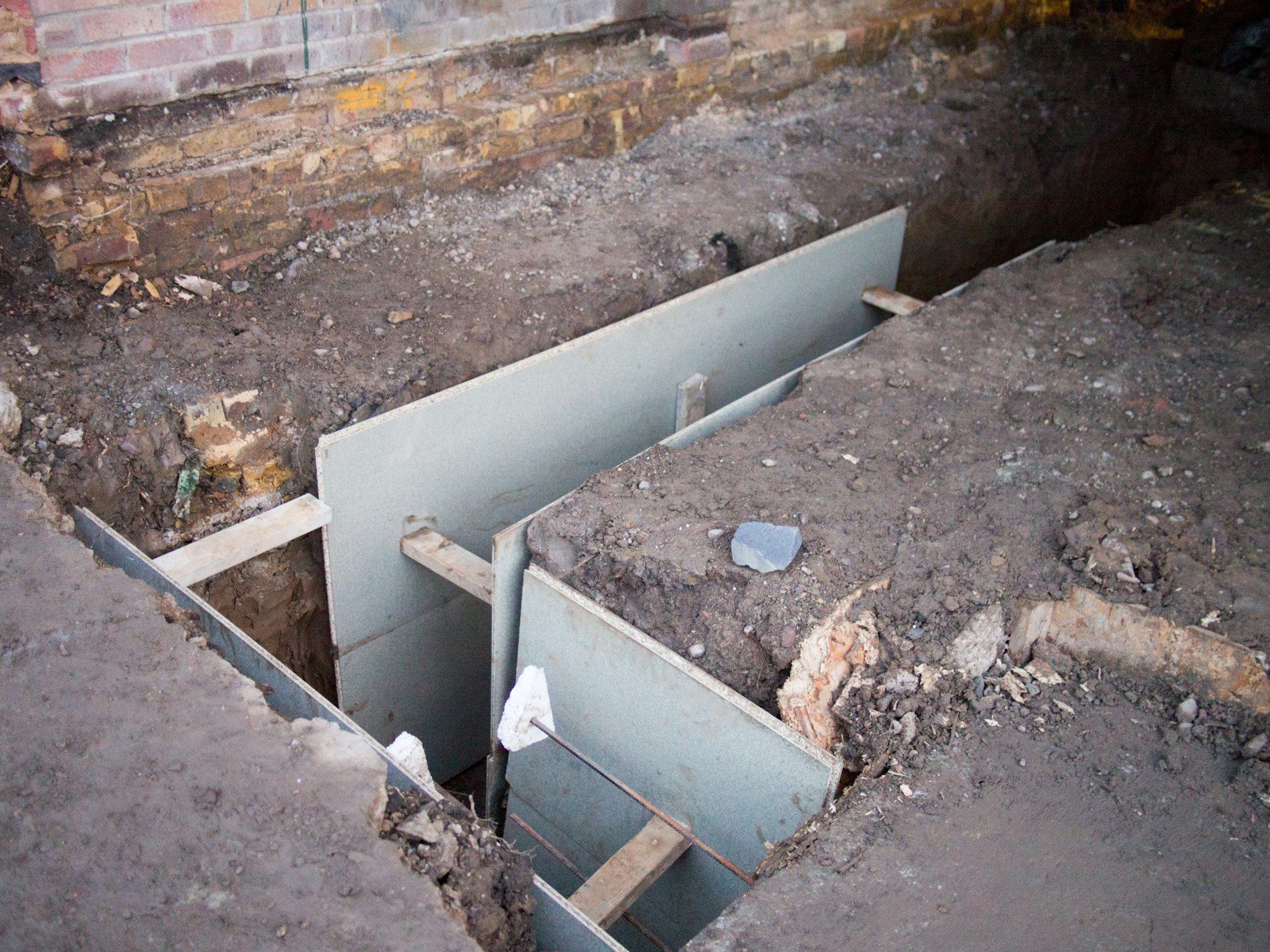
Subsidence Help
A specialist visits the home to find the cause of movement, measures the damage and sets out what needs doing next.
-
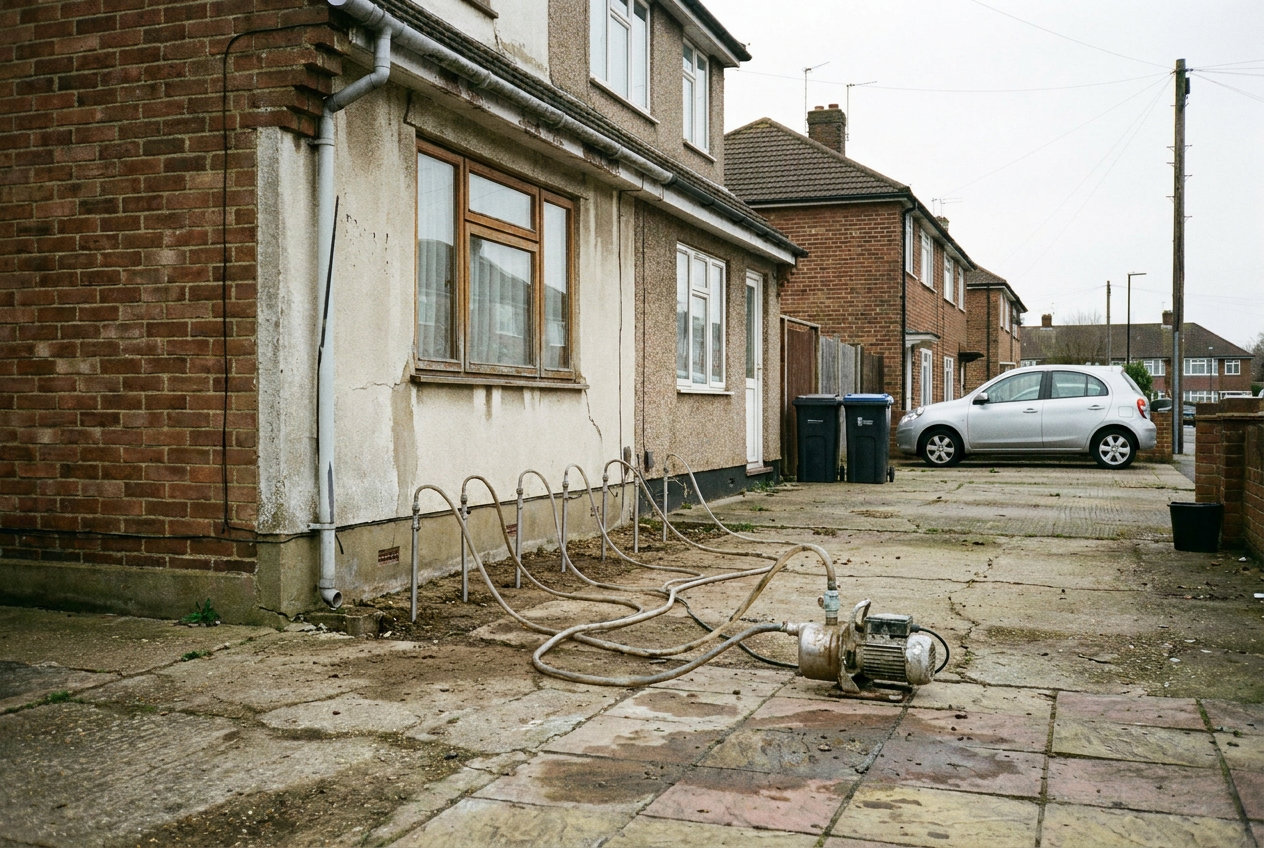
Underpinning
A specialist digs beneath the existing foundations and pours new concrete to stop the house sinking further into clay.
-
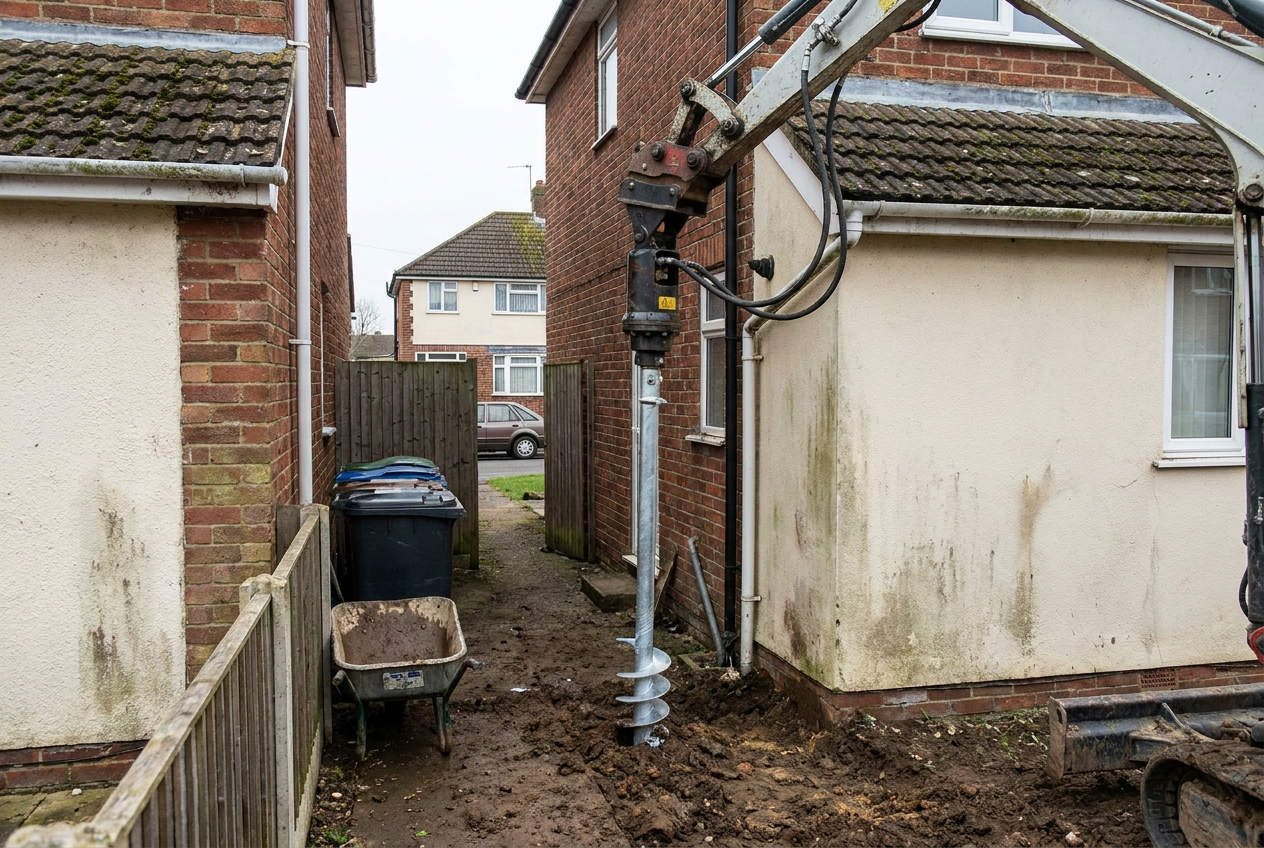
Resin Injection
A specialist pumps expanding resin into the soil below the footings to fill voids and lift settled masonry back toward level.
-

Concrete Cracking
A specialist breaks out damaged floor slabs, treats the subsoil underneath and lays fresh concrete to restore a solid surface.
-
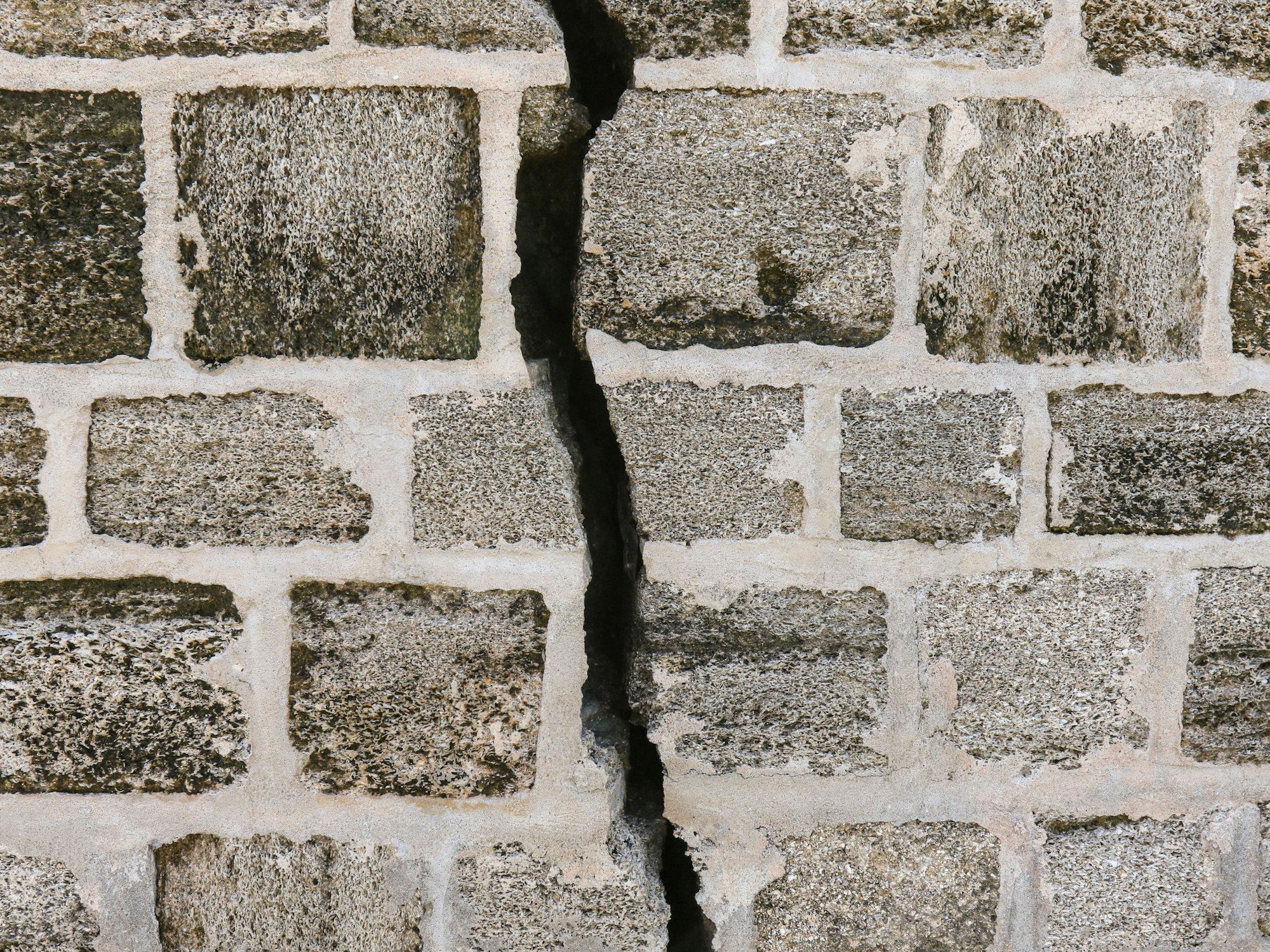
Screw Piling
A specialist drives steel piles deep past the unstable clay until they reach firm ground, then brackets them to the walls.
Why Hendon moves
Clay, trees and old drains under Hendon streets
London Clay shrinks when it dries out and swells when it gets wet. Many Hendon streets were built directly on this soil, so the ground beneath the footings moves with the seasons.
Mature street trees and garden roots draw moisture from the clay during summer. A single large tree can dry the soil several metres away, pulling the ground down under one side of the house.
Interwar drainage was laid in short clay pipes with mortar joints. Decades of ground movement crack those joints, letting water wash fine soil away and leaving voids under the walls.
Parts of Hendon were built over former brickfields and infilled pits. The made ground compresses unevenly under the weight of a house, causing floors to slope and door frames to twist.
Before work starts
What a specialist looks at first
- Crack pattern and width
- A specialist maps every visible crack, records its width and notes whether it tapers. Diagonal cracks wider at the top usually point to foundation movement rather than simple plaster shrinkage.
- Drain testing
- A specialist runs water through the drains and uses a camera to look for fractures. Leaking pipes saturate the clay locally, softening the ground right where the footing bears down.
- Tree proximity
- A specialist identifies nearby trees and estimates how far their roots extend. Removing a tree without understanding the soil can cause the clay to swell and push the house upward instead.
- Foundation depth
- A specialist digs trial holes beside the walls to see how deep the original footings go. Interwar builders often stopped shallow, leaving the base of the wall inside the active clay zone.
- Monitoring period
- A specialist fits glass tell-tales or digital gauges across cracks and leaves them for months. The readings show whether the movement has stopped or is still progressing before any repair begins.
- Soil sampling
- A specialist takes clay samples from boreholes to test moisture content and shrinkage potential. The results determine whether resin, piles or traditional underpinning suits the ground conditions best.
Areas covered around Hendon
Specialist firms take on subsidence enquiries across Barnet and the surrounding neighbourhoods. The same London Clay and similar interwar housing stock run through all these areas, so the causes and repair methods apply widely.
- Hampstead Gdn Suburb
- Hendon
If your street is not listed here, send an enquiry anyway. Coverage extends across the whole borough.
Ask a specialist about your Hendon home
The details you provide go to a specialist firm that handles subsidence in Barnet. They will read what you describe and reply with advice. Sending an enquiry does not commit you to any work or cost.
- No obligation
- Free initial advice
- Local specialists