Drain leaks
Leaking drain causing subsidence under the house
A broken pipe beneath the floor can wash soil away slowly over months. Find out what damp patches, gurgling drains and new cracks might mean, and how a specialist uses cameras and water tests to locate the fault.
Why old drains let water into the ground
Homes built in the Victorian and interwar periods often have clay or cast iron drain runs buried directly under the floor. Clay pipes were laid in short sections with mortar joints that crumble over decades. Cast iron corrodes from the inside out, thinning until it weeps or splits.
When a joint fails or a pipe fractures, wastewater escapes into the surrounding soil every time a sink empties or a toilet flushes. The leak is hidden below ground, so it can continue for months before anyone notices. A leaking mains supply pipe behaves the same way, releasing clean water continuously rather than in bursts.
London clay shrinks when it dries and swells when it gets wet. Constant leaking keeps the clay saturated, softening it so it can no longer support the weight above. In sandy or gravelly soils, the running water carries fine particles away entirely, leaving voids. Either process removes the stable base the foundations were built on, and the house begins to settle unevenly.
What escaping water does to the ground below
The damage depends on the soil type and how long the leak has run. Under a house sitting on London clay, persistent moisture changes the clay from a firm solid into something closer to putty. The footing sinks into it gradually, usually tilting one corner of the room downward.
Where the ground is made up of loose fill or sand, water acts like a conveyor belt. It picks up fine grains and carries them along the pipe trench or into nearby land drains. Over time this hollows out a cavity beneath the slab or the strip foundation. The ground surface may not sag immediately, but once the void reaches a certain size the concrete above it cracks under its own weight.
A weeping supply pipe is harder to spot because it never stops flowing. Drain leaks tend to pulse with household water use, so the washing effect concentrates around specific times of day. Both cause subsidence, but the pattern of cracking can differ slightly depending on where the water goes.
Damp patches and smells that point downward
A leaking drain under a suspended timber floor often shows itself first as a smell. The air below the boards becomes humid and foul, and that scent rises through gaps in the floorboards or around skirting edges. Rooms above the leak may feel persistently cold and damp even when the heating is on.
If the house has a solid concrete floor, moisture can travel upward through the slab. You might see a dark patch that does not dry out, or flooring materials lifting and bubbling without any spill to explain it. Vinyl tiles peel at the corners. Laminate boards cup and separate at the seams.
These signs overlap with rising damp and condensation, so they do not prove a broken drain on their own. But when dampness appears suddenly in a ground floor room that was previously dry, especially near a bathroom or kitchen wall, a sub-floor leak becomes a likely cause worth investigating before assuming the walls themselves are failing.
Gurgling gullies and slow drainage
Outside, the drain gullies tell their own story. A gully that gurgles when water runs down the plughole inside suggests air is being pulled through the system abnormally. That often happens when a pipe downstream has collapsed or filled with silt, forcing water to find another route.
Slow drainage across several fixtures at once points to a shared blockage or failure further along the run. If only one sink is slow, the problem is usually local. But if the bath, kitchen sink and outside gully all behave differently than they used to, the main run beneath the house may be compromised.
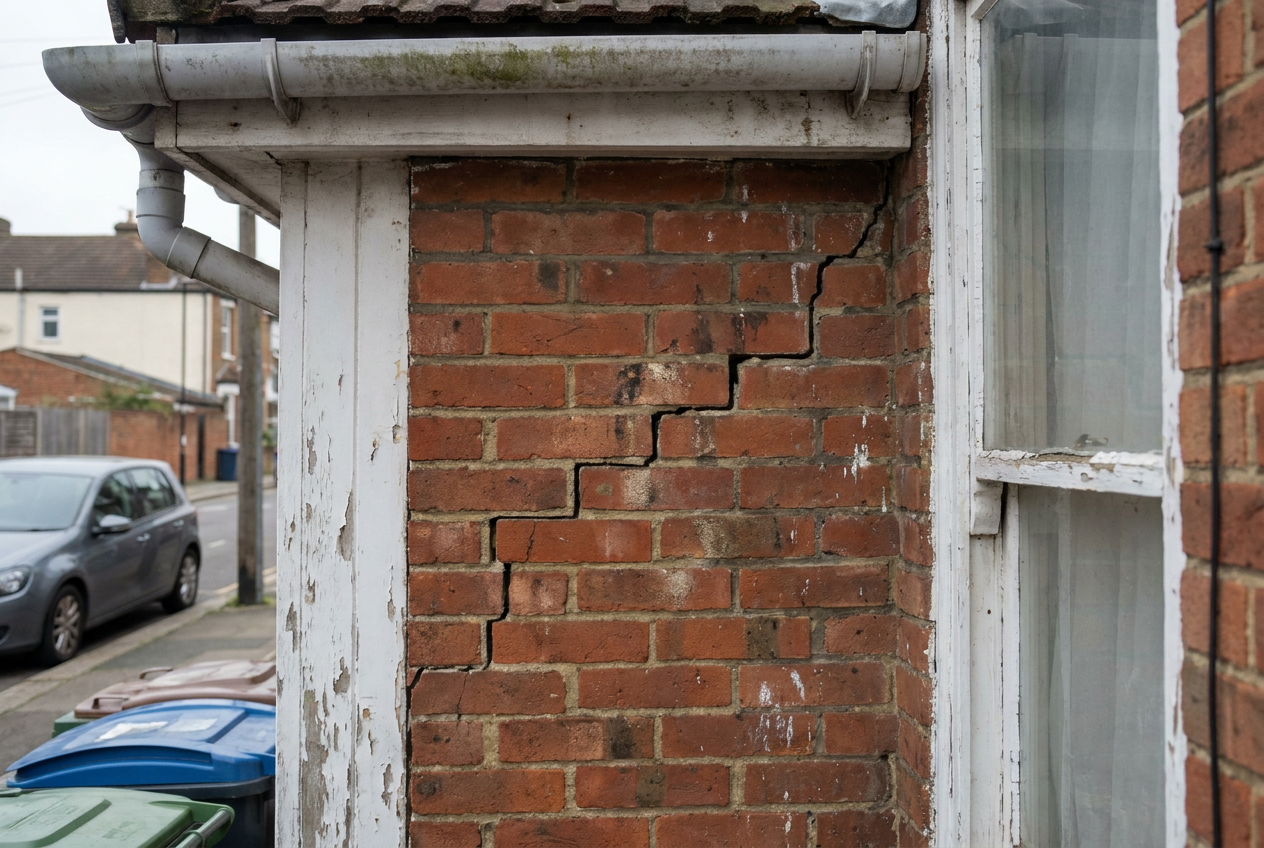
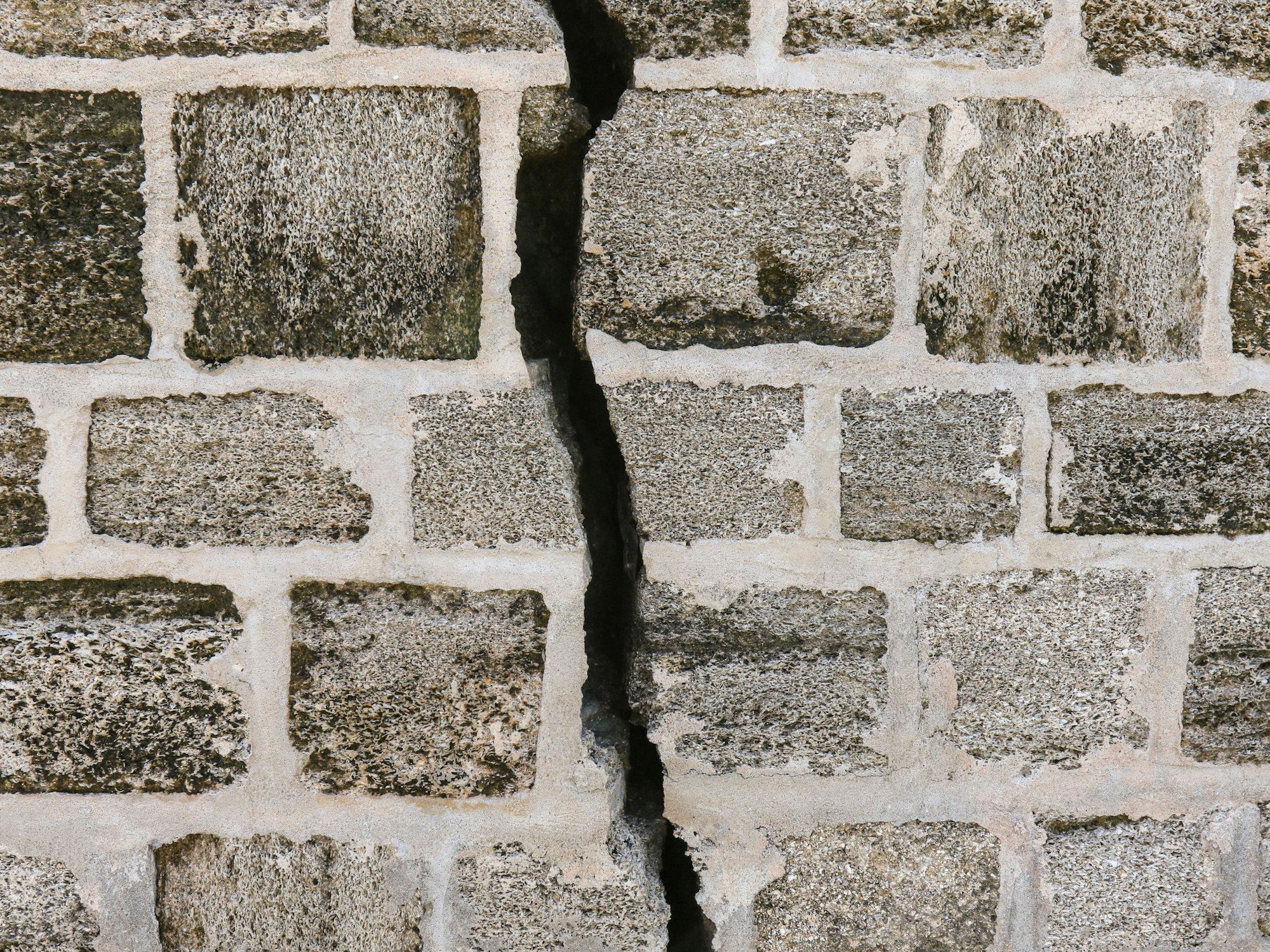
Cracking in the brickwork near a soil stack is another signal. The soil stack is the large vertical pipe carrying waste from upper floors down into the underground run. Where it enters the ground, the surrounding masonry is vulnerable. If the underground connection has shifted or fractured, the movement transfers upward, opening diagonal cracks in the bricks close to the pipe entry point.
How a CCTV survey finds the fault
A drainage specialist feeds a small camera on a flexible rod into the pipework through an access point or rodding eye. The camera transmits live footage to a monitor above ground, showing the interior condition of every metre of pipe it passes through.
Roots appear as pale threads pushing through joints. Collapsed sections show as sudden darkness where the pipe walls have caved inward. Fractures look like jagged lines running along the barrel of the pipe, sometimes with water visibly seeping through them. The specialist records the distance to each defect using a counter on the cable, so the exact location can be mapped against the building plan.
CCTV cannot see leaks that occur outside the pipe, in the surrounding soil. It shows where the pipe is damaged, which strongly implies where water is escaping, but it does not measure the extent of the ground washout. For that, other tests are needed alongside the camera work.
Water testing to confirm a leak
Once the camera identifies suspect sections, a specialist can isolate them and fill the pipe with water to see if the level drops. This is called a static water test. The pipe is plugged at both ends of the section, filled completely, and left for a set period. Any fall in the water level confirms that liquid is escaping through a hole or failed joint.
For pressurised supply pipes, a different approach applies. The specialist shuts off the stopcock and watches the pressure gauge on the mains feed. If the needle falls while no taps are open, water is leaving the system somewhere between the metre mark and the house.
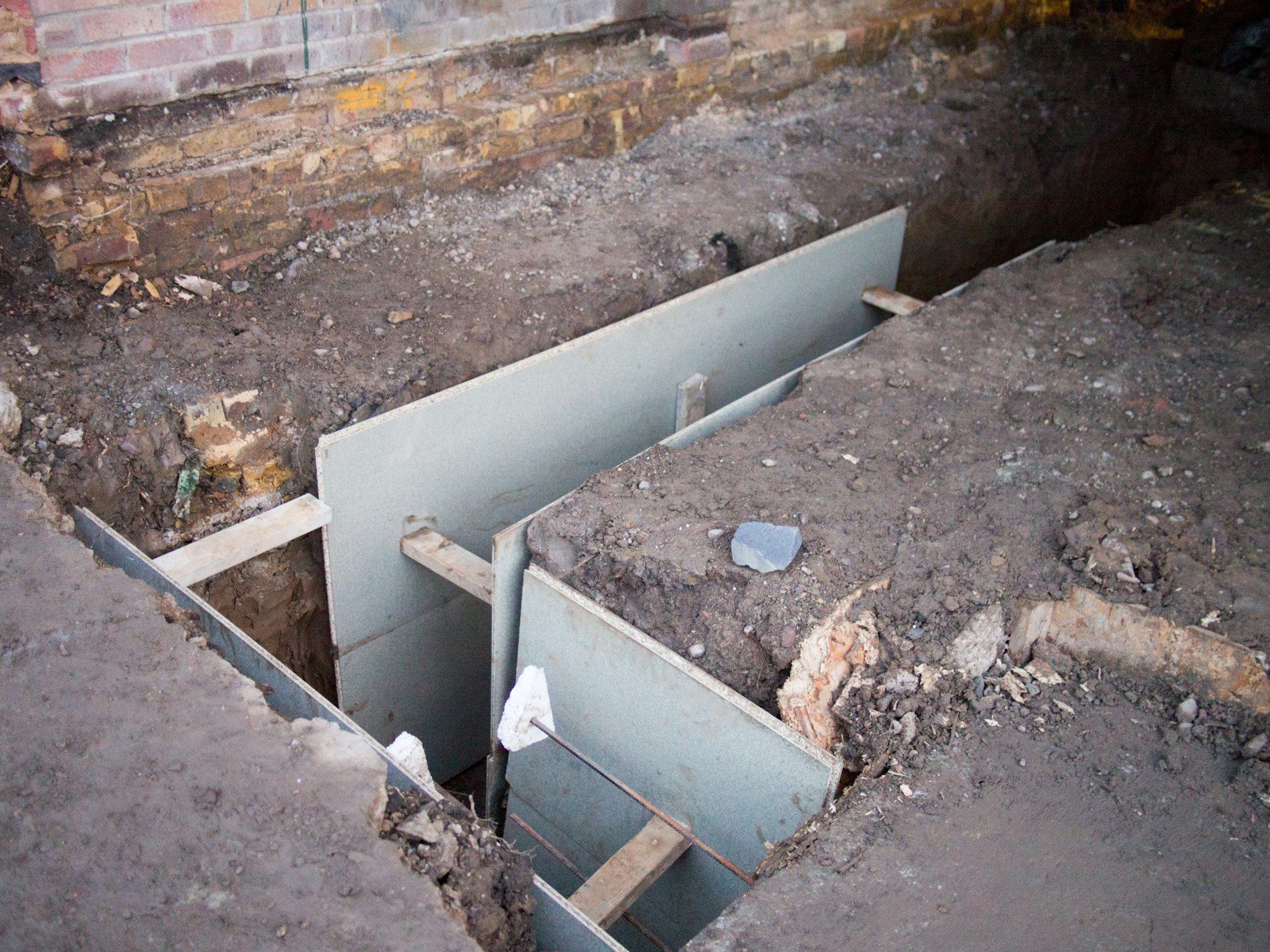
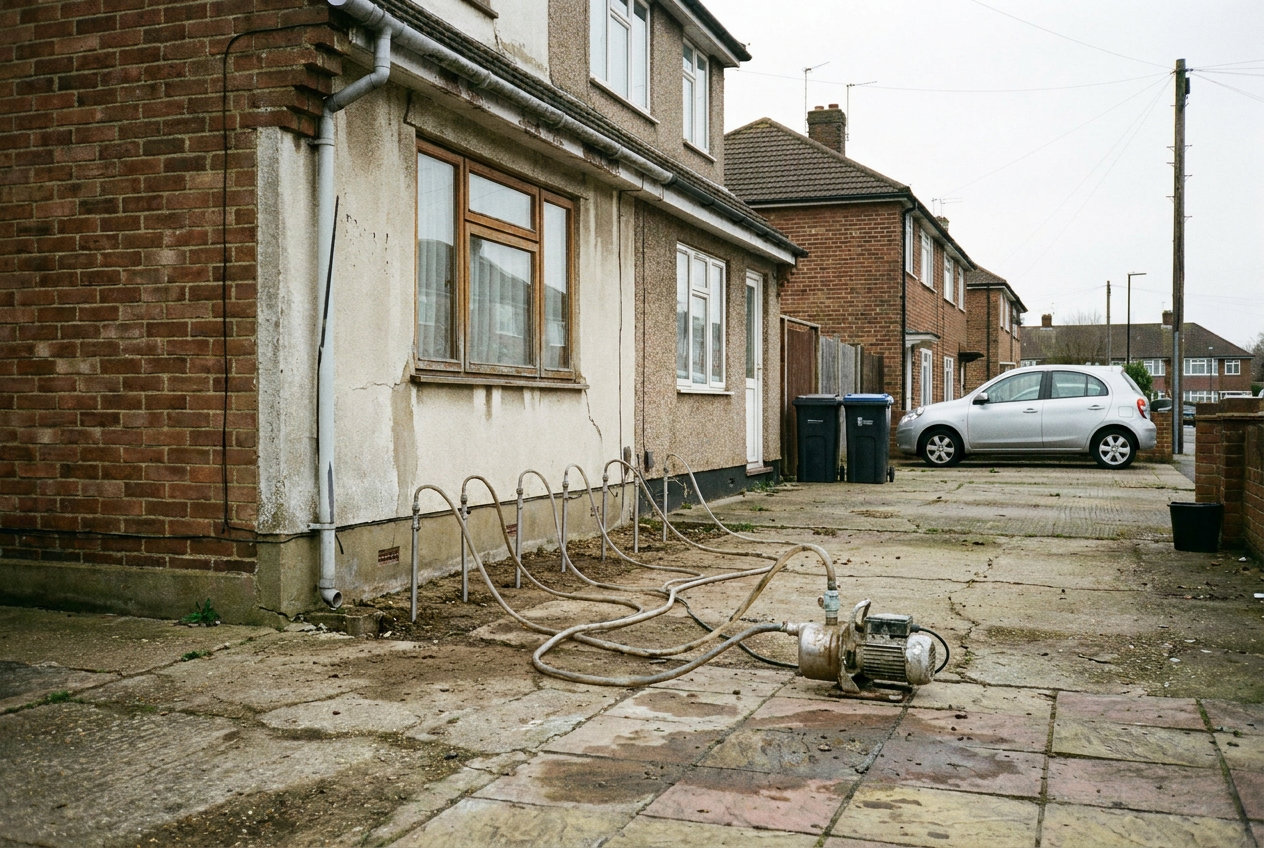
These tests turn suspicion into evidence. They tell the structural engineer exactly which pipe is failing and roughly how much water is being lost, which determines whether the ground needs drying out, filling, or underpinning before the drain repair alone will stabilise the home.
Could a broken drain be moving your home
Water escaping from a buried pipe softens or washes away the soil holding up your foundations. The signs start small and build slowly, often looking like ordinary wear until a pattern emerges.
- 1
Persistent damp on ground floors
A dark patch that stays wet without any obvious spill, often near a bathroom or kitchen wall, can mean water is rising from a leak below the slab.
- 2
Gurgling sounds from outside gullies
Air bubbling through a drain cover when you empty the bath suggests a blockage or collapse further along the underground pipe run.
- 3
New cracks beside the soil stack
Diagonal cracking in brickwork where the main waste pipe enters the ground may indicate the underground connection has shifted or fractured.
- 4
Lifting or bubbling floor finishes
Vinyl peeling or laminate cupping in a previously dry room points to moisture travelling up through a solid concrete floor from below.

- 5
Sudden drop in water pressure
A noticeable loss of flow at the taps with no supply interruption could mean a pressurised pipe under the house is leaking into the soil.
Questions about drains and ground movement
Answers to the things homeowners ask most when they suspect a pipe is leaking beneath the floor.
- Can fixing the drain stop movement
- Stopping the leak prevents further soil loss. Existing settlement may still need structural repair, but halting the water is always the first step.
- Does insurance cover drain leaks
- Many buildings policies cover escape of water and resulting subsidence. Check whether your policy includes trace and access costs for finding the fault.
- How deep are old drains buried
- Victorian and interwar drains often sit less than a metre below the floor, sometimes directly under the foundations with little protective bedding.
- Will roots get into clay pipes
- Tree roots seek moisture and easily penetrate the mortar joints of old clay pipes, widening gaps until the pipe collapses or blocks entirely.
- What happens after the survey
- A structural engineer reviews the drainage report alongside crack patterns to decide whether the ground needs resin injection, underpinning or simply drying out.
Tell us what you have noticed at home
Describe the damp, the sounds or the cracks you can see. A specialist will read the details and advise whether a drainage survey or ground investigation is the right next step. There is no obligation to proceed.
- No cost to enquire
- Read by a specialist
- No commitment required