Describe what you have noticed
Underpinning in Barnet
Underpinning in Barnet: what the work involves
A crack has appeared and someone mentioned underpinning. Before you agree to anything, find out what the methods involve, how much disruption they cause inside a terrace or semi, and why depth decides which approach a specialist uses.
- Methods explained plainly
- Disruption set out before work starts
- Depth and load drive the choice
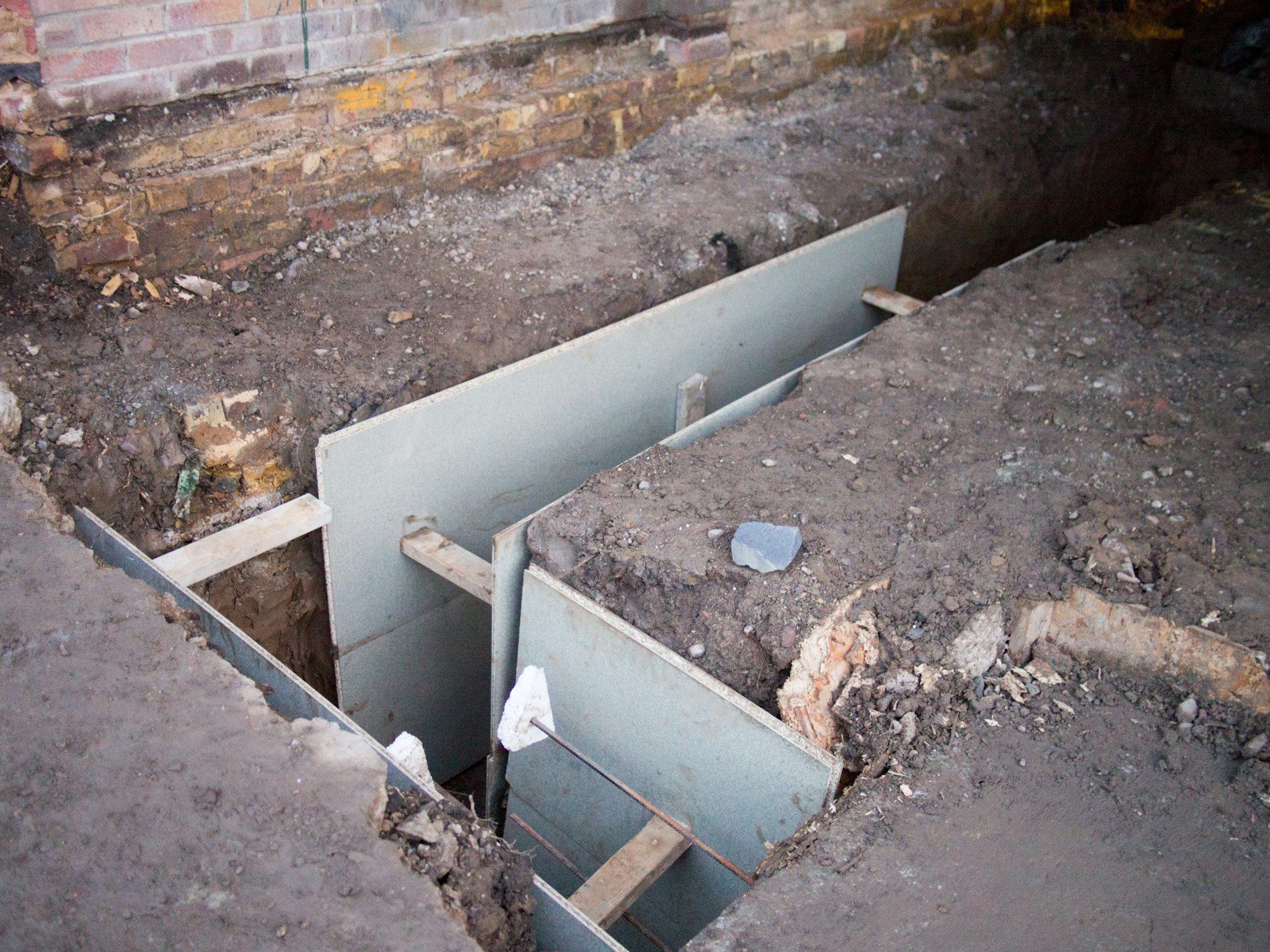
Foundation methods
The main underpinning types a specialist may quote for

- Mass concrete underpinning
- Sections of soil below the existing footing are dug out one at a time and filled with concrete. This suits shallow foundations where firm ground sits within reach.
- Reinforced beam and base
- A concrete beam is cast below the wall to spread the load onto new pads. It works where walls carry heavy loads over weaker ground.
- Resin injection
- Expanding resin is pumped into the soil beneath the footing to compact it and lift the structure. It requires no excavation and suits lighter loads.
- Screw piling
- Steel piles are driven deep into stable strata and capped with a beam to support the wall above. Used where good ground lies far below.
Access and sequence
What working inside a terrace or semi means
The shape of your home and the space around it dictate how a specialist reaches the foundations and in what order the work proceeds.
- Working through the floor In terraced houses with no side access, specialists often remove internal floorboards and dig beneath the rooms. Furniture must be cleared from the affected area first.
- Sequence of bays Foundations are never excavated all at once. Work proceeds in alternating bays so the wall remains supported while each section cures.
- Party wall constraints Where foundations sit against a shared wall, the adjoining owner must receive formal notice before any digging begins next to their property.
- Depth dictates the plant Shallow repairs need only hand tools. Deeper piles require small rigs that must fit through standard doorways or down narrow side passages.

What you do and what the specialist handles
You describe the movement and let them into the rooms they need. The specialist manages every technical step from investigation through to the finished repair.
Your part
- Note when the crack first appeared and whether it changes with the seasons
- Clear furniture and floor coverings from the rooms they need to access
- Allow the agreed visits for surveys, monitoring and the work itself
The specialist's part
- Survey the damage and measure the existing foundations
- Commission boreholes or trial pits to check the soil at depth
- Specify the underpinning method that matches the load and ground
- Carry out the excavation, pour concrete or install piles in sequence
- Monitor the levels after completion to confirm the movement has stopped
Documents you receive after the assessment
Every recommendation rests on measurements taken from your home. The paperwork records what was found, what it means and exactly what the proposed repair involves.
Site investigation report
Records the depth of your current footings, the type of soil found below them and where stable ground begins.
Method statement
Sets out the chosen technique, the sequence of bays, the equipment required and the expected duration of the work.
Structural calculation
Shows the loads the new foundation must carry and proves the design meets building regulations.
Monitoring schedule
Lists the dates when readings will be taken after the repair to confirm the wall has stabilised.
Questions about underpinning methods
Things homeowners in Barnet ask before agreeing to foundation repairs on a terrace or semi-detached house.
- How long does mass concrete take?
- Digging and pouring happens in short bays. Each section needs several days to cure before the next one begins, so expect weeks rather than days.
- Will resin injection lift my wall back?
- It can raise a settled wall slightly, but its main job is to compact loose soil. Large movements usually need deeper structural support.
- Do I need to move out?
- For internal floor removal, living elsewhere makes the work easier and safer. External access sometimes allows you to stay in the unaffected rooms.
- What if my neighbour refuses access?
- The Party Wall Act gives you rights to carry out necessary foundation work, provided the correct notices have been served by a surveyor.
- Why not just fill the crack?
- Filling hides the symptom. If the ground is still moving, the crack will reopen until the foundation is properly supported.
Find out which method suits your home in Barnet
Describe the cracking or movement you have noticed. A specialist who understands local ground conditions will review the details and advise on the right approach.