Screw piling
Screw piling under a house and extension floors
Find out what screw piles are, how a specialist installs them in narrow London gardens using small plant, and how pile depth and spacing follow from the ground investigation beneath your home.
Foundation methods
When Screw Piles Are the Answer

Deep clay support
London clay shrinks and swells with the seasons. Screw piles transfer the load of a home past this active zone into stable ground below, where moisture changes no longer cause movement.
Restricted rear access
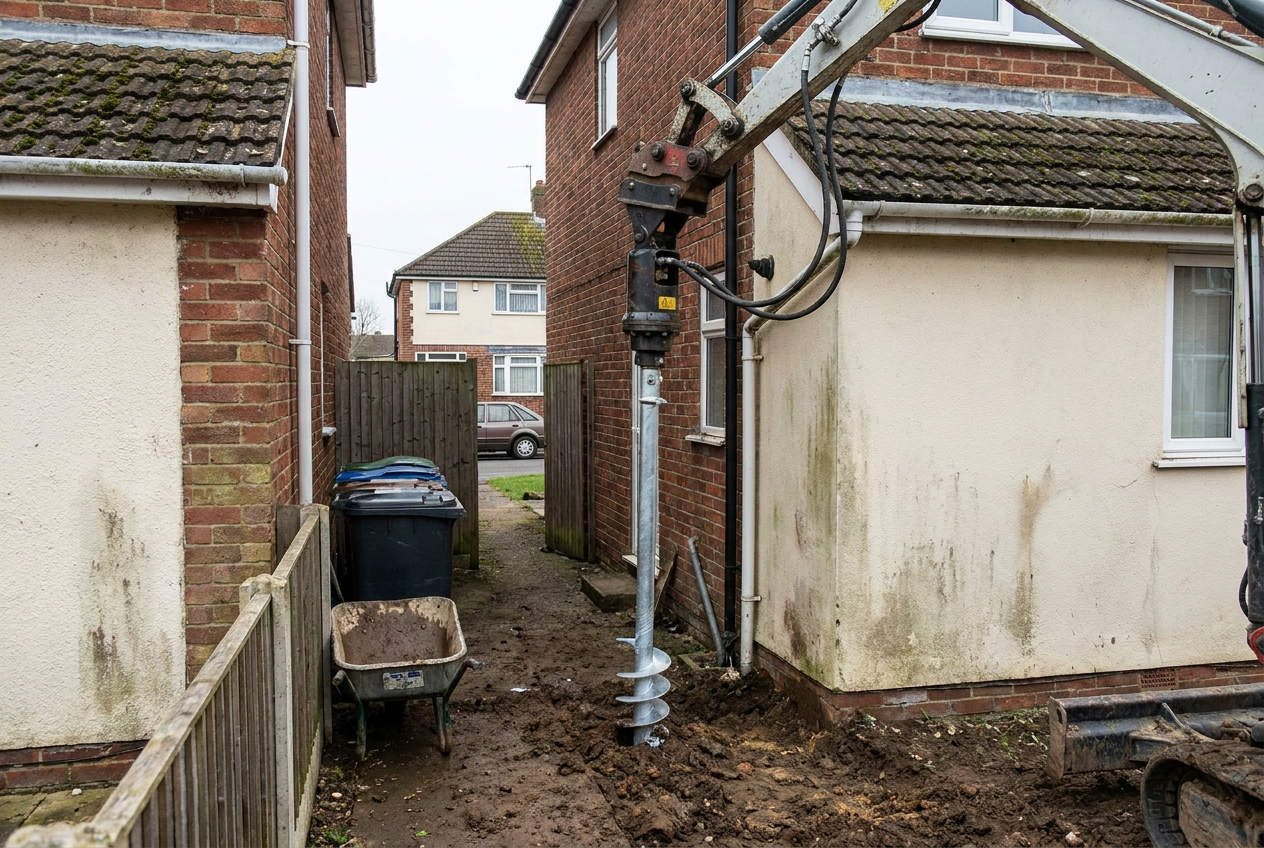
Many Barnet gardens have narrow side returns or fences that block large machinery. Specialists use compact tracked rigs to install piles in spaces where conventional underpinning equipment cannot fit.
Settling extensions
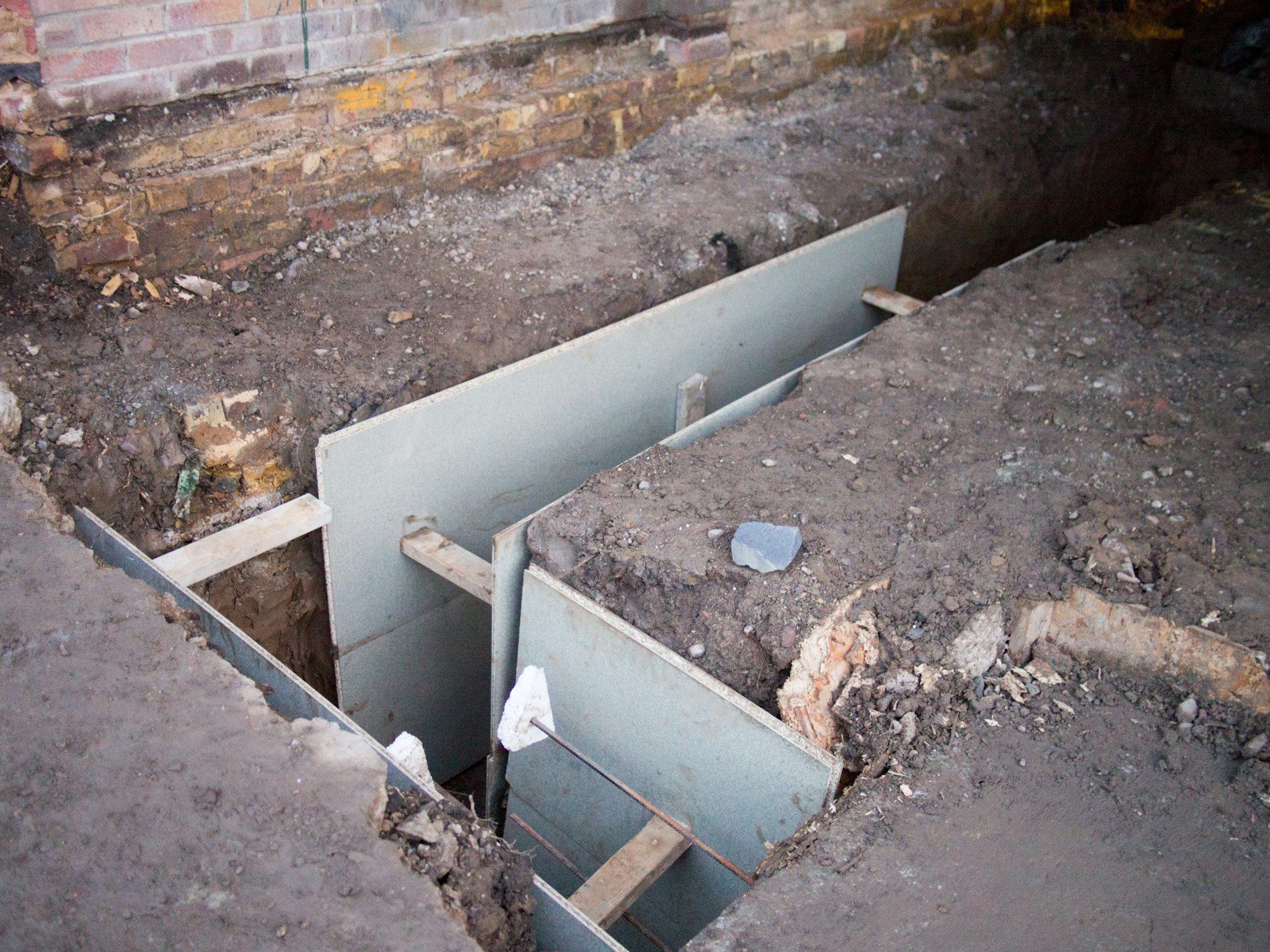
An extension often has shallower foundations than the main house. When it settles away from the older structure, screw piles can arrest the movement without excavating along the entire wall.
How it works
Deciding Pile Depth and Spacing
The design depends entirely on what the ground investigation reveals about the soil beneath the specific part of the home that is moving.
- Ground investigation A specialist drills trial holes or boreholes to find where firm strata begin. The depth of soft clay, made ground or water determines how long each pile must be to reach competent bearing.
- Load calculation The weight of the wall or floor above dictates how many piles are needed. Heavier loads require closer spacing or larger helical plates welded to the steel shaft.
- Installation torque During installation the rig measures resistance as the pile turns into the ground. If the torque reading matches the engineer's calculation, the pile has reached its design depth.
- Bracket connection Once the piles are in place, a specialist fixes brackets to the existing foundation. The load transfers gradually onto the new steel supports while the ground settles around them.

Typical costs for screw pile work
Depth, access and the number of piles all change the price. A job behind a narrow terrace costs more per pile than one in an open garden because the rig takes longer to position. Soil conditions dictate length, so two houses on the same street can differ widely.
-
Single pile for a bay window
£1,200 to £2,500
Depth to firm strata and whether the rig can reach the front elevation easily.
-
Extension corner stabilisation
£4,000 to £8,500
Number of piles required and how restricted the rear garden access is for the plant.
-
Full rear wall support
£9,000 to £18,000
Length of the wall, soil investigation findings and any drainage rerouting needed first.
-
Ground investigation report
£1,500 to £3,000
Number of boreholes the structural engineer specifies before designing the pile layout.
These figures indicate what work of this type typically costs. Nothing here is a quotation. Only a site inspection can settle a figure for one home.
What happens after you send an enquiry
The details go to a foundation specialist covering Barnet who handles screw piling. They review the information and arrange a visit if the situation calls for one. There is no obligation at any stage.
-
The same day it is sent
Your details arrive with a local specialist who reads the description of the problem and checks their diary for an inspection slot.
-
Usually within a few days
The specialist contacts you directly to ask any remaining questions and agree a time to look at the affected part of your home.
-
After the visit
If piles are appropriate, the specialist prepares a report and a figure for the work. You decide whether to proceed.
Which situation matches your home
The signs below describe common reasons a homeowner asks about screw piles. What matters is how soon to act, because only an inspection establishes what is actually happening beneath the ground and what the right response is.
-
A gap opening between my extension and the main houseToday
Differential settlement between old and new foundations. The extension may be sinking into clay that the original footings do not reach.
What to do Ask for an inspection so a specialist can measure the movement and check the ground.
-
My bay window leans outward and the glass cracksSoon
Shallow footings on clay losing support as tree roots draw moisture away from the soil beneath the bay.
What to do Arrange a visit to find out whether piles or another method suits the space.
-
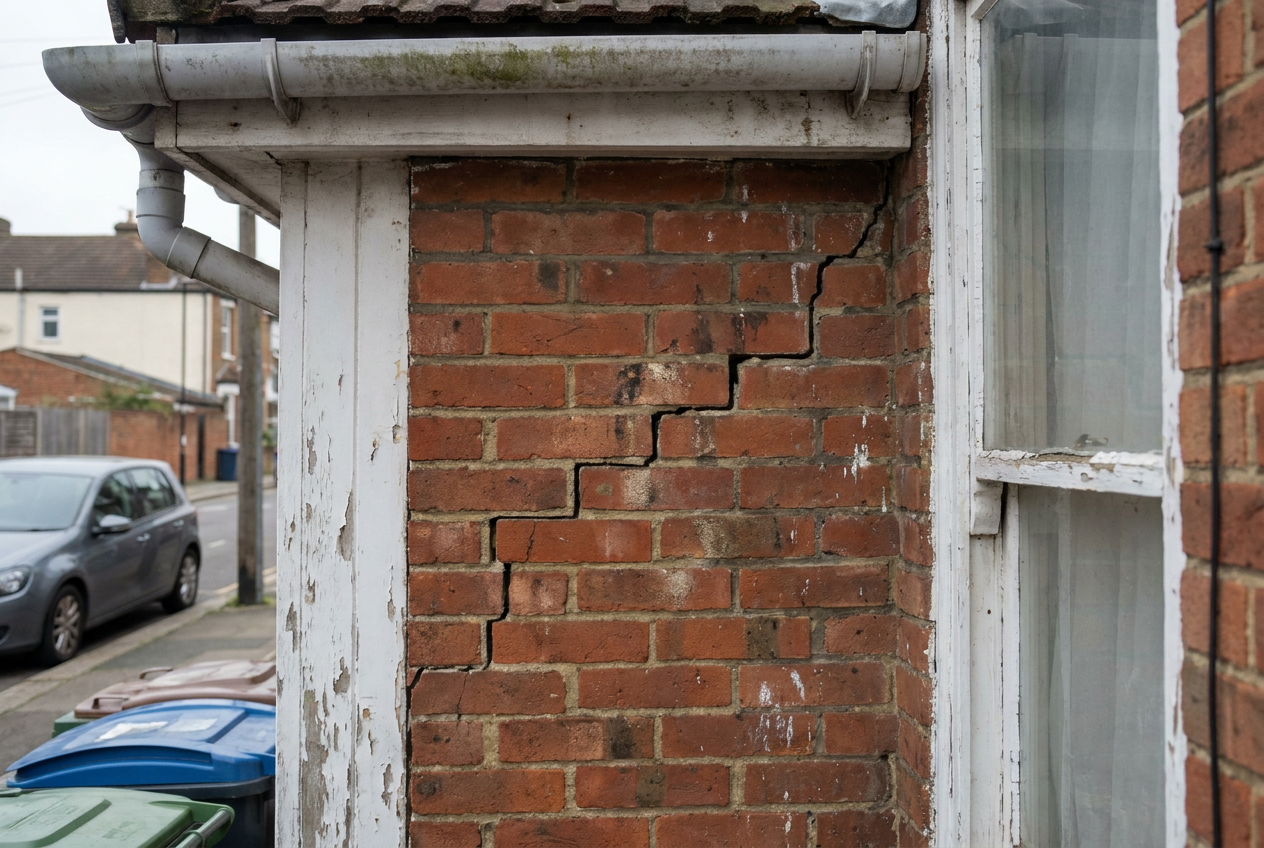
Diagonal cracks near the back door getting widerSoon
Rear walls often sit on shallower foundations. Seasonal clay shrinkage opens cracks that close again, but progressive widening suggests ongoing loss of support.
What to do Have the cracks monitored and the soil checked before deciding on piles.
-
Floors slope toward one corner of the roomWorth watching
Gradual settlement over years. It may have stopped, or it may continue slowly depending on nearby trees and drains.
What to do Record the level with a spirit level every few months and ask if it changes.
None of this diagnoses a particular home. Anything sudden, widening fast or accompanied by sticking doors is worth asking about now rather than waiting.
Ask about screw piling for your home
Send the details of what you have noticed. A foundation specialist covering Barnet will read them and contact you. Doing this does not commit you to any work or payment.
- No obligation
- Local specialists
- Free to enquire