Guides and advice
Subsidence advice guides for worried homeowners
Find out what causes cracks, how clay and trees affect foundations, and what a specialist firm might do. These pages describe the ground beneath Barnet homes so you know what to look for before asking for help.

Why the ground matters more than the walls
A crack in plaster is usually a symptom. The cause sits below the floor, in the soil that carries the weight of the house. Barnet sits on London Clay, a material that swells when wet and shrinks when dry. That seasonal movement transfers directly into brickwork.
Houses built decades ago were designed with shallow footings. They cope with normal weather but struggle during long dry spells or when a large tree draws moisture from the soil nearby. The foundation moves, the wall follows, and a line appears above a door frame or along a ceiling.
Knowing this changes how you look at your home. A hairline crack after winter might close again by summer. A gap that keeps widening over months points to something else entirely. Reading the ground helps you decide whether to wait or ask a specialist firm to investigate.
Trees, drains and made ground
Three things cause most subsidence in Barnet: tree roots, leaking pipes and old infilled land. Each one alters the moisture content of the clay beneath the foundations.
Large trees near a house extract thousands of litres of water from the soil every year. If the roots reach the clay under the footings, the ground dries out and sinks. Removing the tree suddenly can cause the opposite problem, as the clay reabsorbs water and heaves upward.
A cracked drain or broken water main washes fine particles out of the soil. Over time, a void forms and the ground above it drops. This often shows up as cracking concentrated on one side of the house.
Parts of Barnet were built over old brickfields and clay pits. Builders filled the holes with whatever was available. That made ground compresses unevenly, sometimes decades after the houses went up. Understanding which of these factors applies to your street tells you what a structural engineer will look for first.
What happens after you notice a crack
The first step is measuring. A specialist firm will fit tell-tales across the crack to record whether it opens, closes or stays still over several months. Rushing to repair without those readings means guessing at the cause.
If monitoring shows ongoing movement, the next stage is finding out why. That might involve trial holes dug beside the foundations, a drain survey or checking the depth and spread of nearby tree roots. Each test narrows down the options.
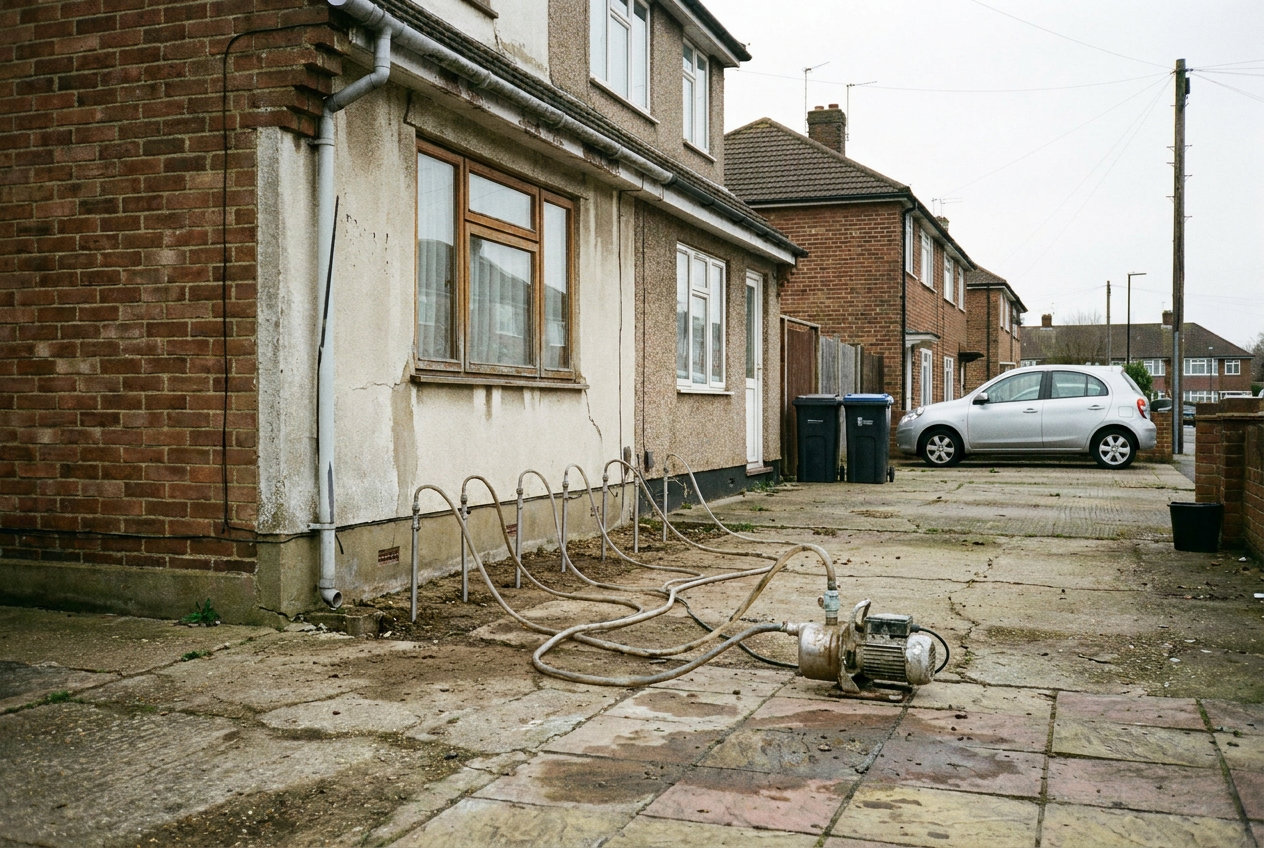
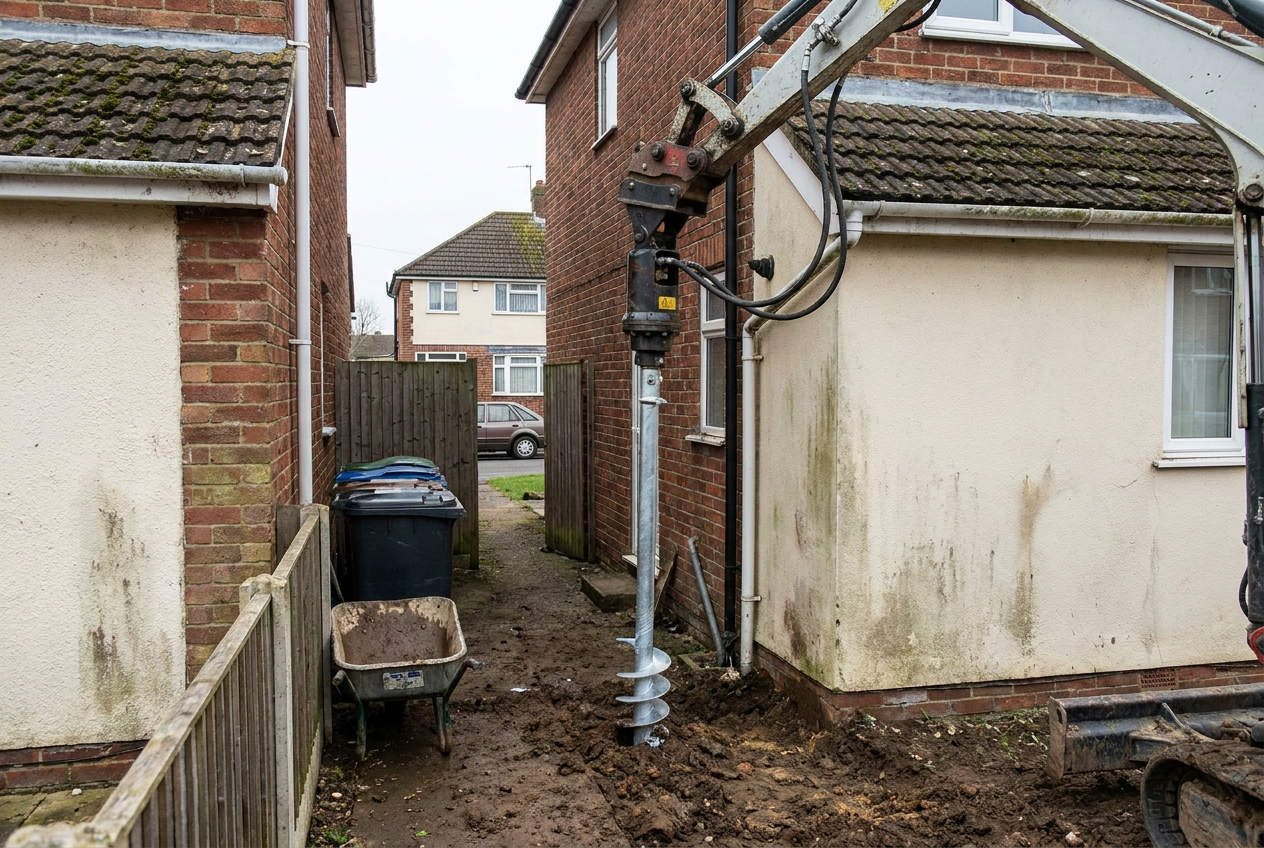
Repairs range from pruning a tree to installing piles driven deep past the clay. Underpinning is one method, resin injection another. Screw piling suits sites where access is tight or the ground is particularly poor. The right approach depends entirely on what the investigation finds. No two houses share exactly the same combination of soil, loading and history, so no single fix works everywhere.
How these guides are written
Every page here describes a specific part of the problem. Some focus on geology, like the behaviour of London Clay or the history of brickfield pits. Others look at particular symptoms, such as leaning bay windows or cracks where an extension meets the main house.
The writing avoids promises because the condition of your home cannot be assessed from a screen. What it offers is context. When you understand why a Victorian terrace in Finchley behaves differently from a 1930s semi in Edgware, you can ask better questions.
Specialist firms carry out the actual investigations and repairs. These pages exist so you arrive at that conversation informed, knowing what the ground beneath your home is likely doing and why it matters.
Signs your home might be moving
Movement in the ground shows up in the structure above it. These are things you can see yourself, before anyone digs a hole or sets up equipment.
- 1
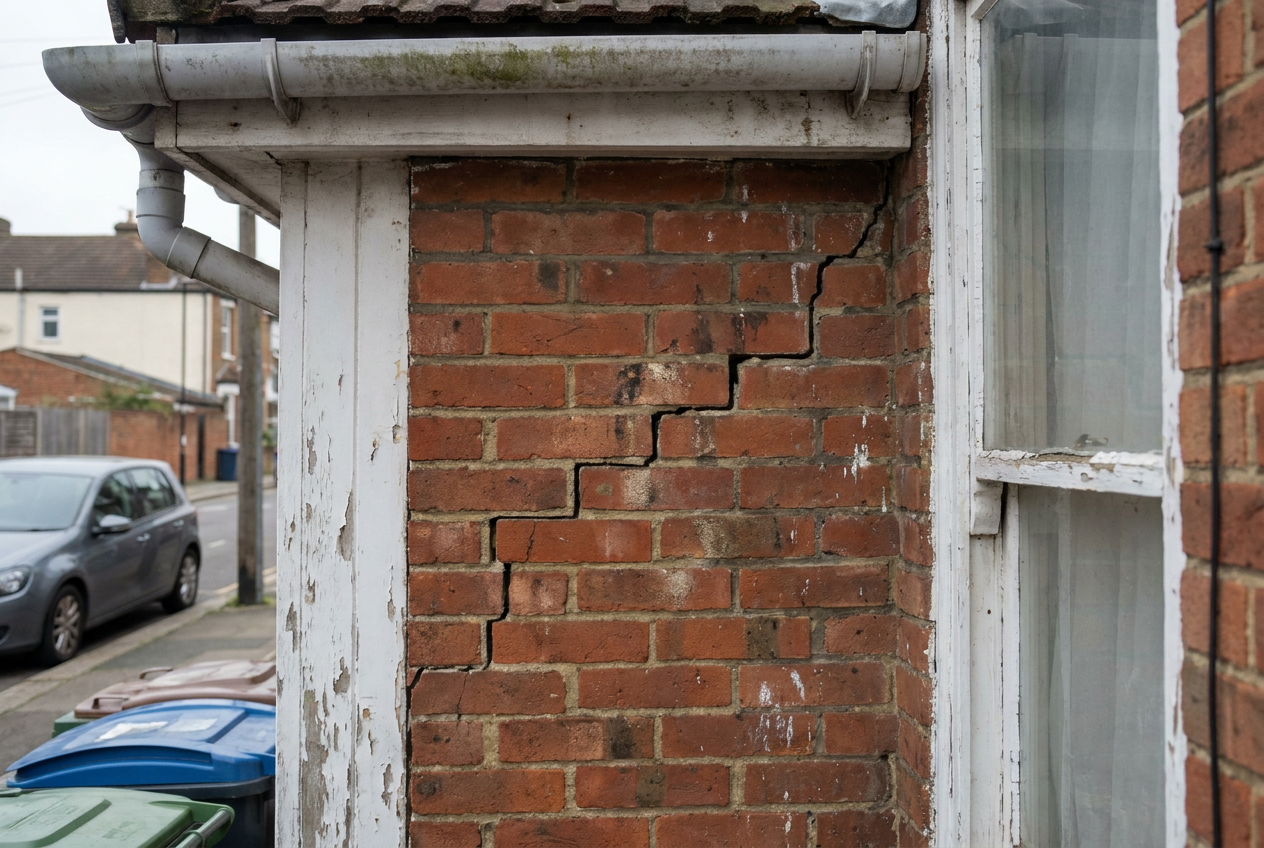
Diagonal cracks near doors
A crack running at an angle from a door or window corner often follows the path of least resistance through brickwork.
- 2
Sticking windows and doors
Frames that jam without swelling from damp may have shifted because the wall around them moved slightly.
- 3
Gaps around skirting boards
A visible space between the skirting and the floor can appear when one section of the house settles lower than another.
- 4
Ripples in wallpaper
Paper that lifts or creases without damp behind it suggests the plaster underneath has moved enough to break the bond.

Common questions about subsidence
-
Short answers to the things homeowners ask most often before deciding what to do next.
- Does every crack mean subsidence?
- No. Many cracks come from thermal movement or drying plaster. Width, direction and timing matter more than presence alone.
- How long does monitoring take?
- Usually six to twelve months. Specialists need readings across seasons to separate normal movement from a real problem.
- Will my insurance cover it?
- Most buildings policies include subsidence, but excess amounts vary. Check your documents before instructing any work.
- Can I sell a house with cracks?
- Yes, though buyers and lenders will want evidence of investigation or completed repairs before proceeding.
Ask for an assessment of your home
Send details of what you have noticed. A specialist firm will review the information and advise whether a site visit is needed. There is no obligation to proceed with any work they recommend.
- No obligation
- Local specialists
- Free initial review