Local ground conditions
House on slope movement near Barnet's brooks
Find out why houses close to Dollis Brook, Silk Stream and Pymmes Brook move differently from those on dry clay. Learn how a specialist reads the ground beneath a sloping garden and what that means for any repair.
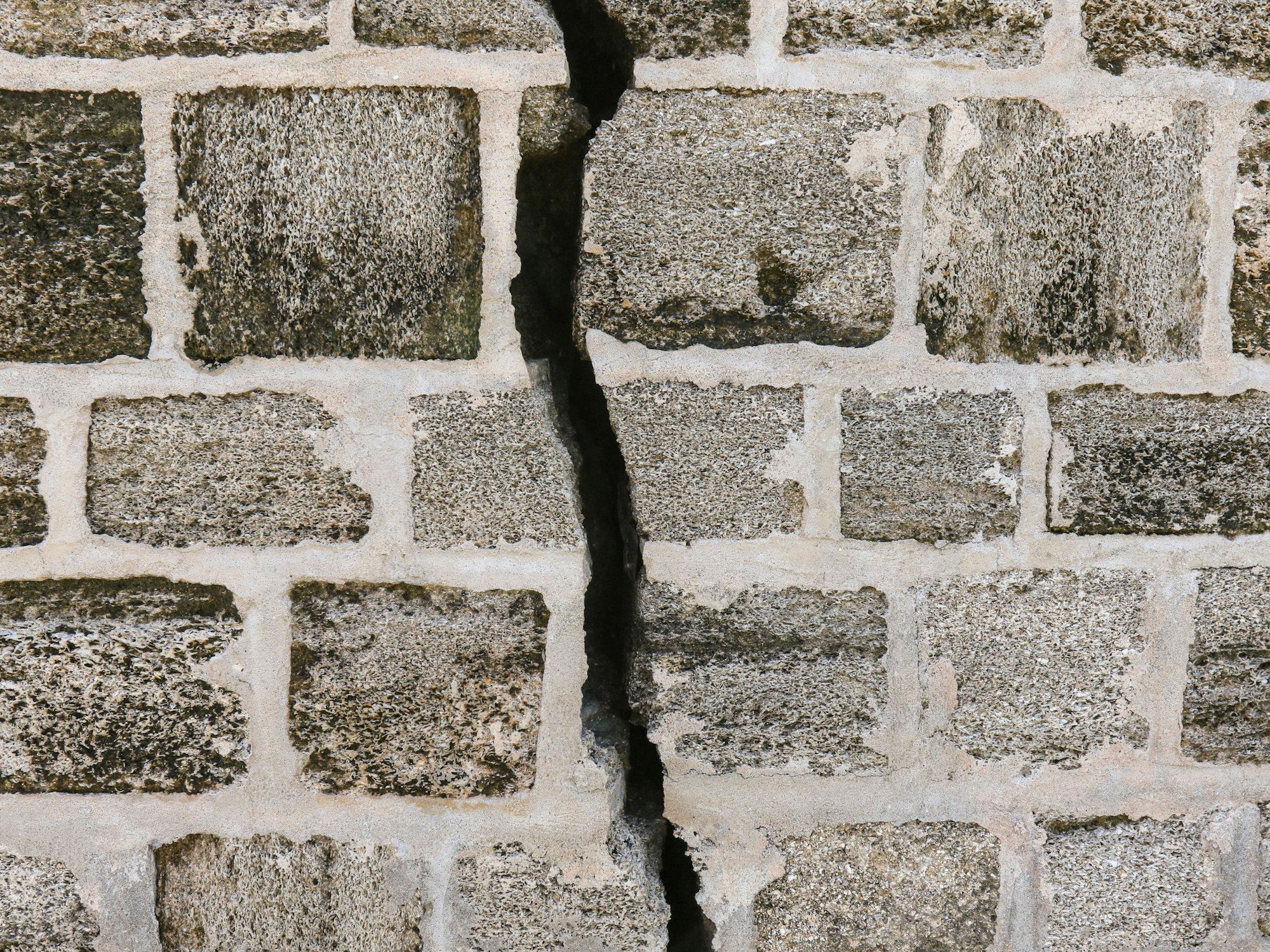
Soft valley deposits beneath Barnet's streams
Dollis Brook, Silk Stream and Pymmes Brook cut through low ground where the soil is softer than the London Clay found on higher streets. These valleys hold layers of sand, gravel and silt left by ancient watercourses. Houses built over or near these deposits rest on material that compresses more easily under weight.
A home on soft valley fill behaves differently from one on firm clay. The ground can settle unevenly, especially where the depth of soft material changes across the footprint of a building. One corner might sit on shallow gravel while another rests on deeper silt. That difference shows up as movement in the walls above.
Water plays a large part here. A high water table keeps these deposits saturated. If drainage work lowers the water level, or a long dry spell reduces it naturally, the soft layers lose volume. The ground sinks slightly, and the house follows. A specialist looks at borehole records and local geology maps to understand exactly what lies below before deciding on a repair.
How a high water table affects foundations
Brooks and streams keep the surrounding ground wet. In parts of Barnet near these watercourses, the water table sits close to the surface year round. Foundations dug into this zone are permanently surrounded by moisture, which changes how the soil supports them.
Clay shrinks when it dries, but soft alluvial soils behave differently. They compress when water drains away and expand when they absorb it again. Seasonal rain, blocked ditches or changes to nearby surface drainage can all shift the water level enough to move the ground beneath a house.
Leaking drains add another variable. Water escaping from a cracked pipe washes fine particles out of sandy soil, leaving voids. Over months, the ground above those voids drops. A specialist investigating movement near a stream will check drain runs and water pressure before assuming the problem is natural settlement. Finding the source of extra water, or the reason water has been lost, often points directly to the cause of the cracking.
Downhill gardens and slope movement
Streets in Childs Hill, Mill Hill and parts of Totteridge follow the contours of the land. Where a garden slopes downhill toward a brook, gravity pulls slowly on the soil. This process, called creep, moves the top layers of earth downward over years.
A house at the top of a slope might be stable while its lower boundary wall leans outward. Retaining walls in terraced gardens take the pressure of the ground behind them. When that pressure increases because of heavy rain or tree roots, the wall tilts, and the ground near the house shifts with it.
Slope movement produces a specific pattern of damage. Cracks tend to run diagonally, wider at the top, on the downhill side of the building. Doors on that side stick first. A structural engineer distinguishes this from clay shrinkage by measuring the direction of tilt and checking whether the movement correlates with the gradient rather than the position of trees.
Separating slope creep from clay shrinkage
London Clay causes most subsidence in Barnet, so it is easy to assume every crack comes from drying soil. Near the brooks, the picture is more complicated. A house might sit partly on clay and partly on river terrace deposits. Each material responds to weather in its own way.
Clay shrinkage follows the seasons. Cracks open in late summer when trees draw moisture from the ground and close partially in winter when rain returns. Slope creep does not reverse. It accumulates slowly, pushing walls out of alignment in one direction. A specialist uses crack monitors over several months to track whether movement stops in wet weather or continues regardless.
The distinction matters because the repair differs. Clay problems often respond to managing vegetation or injecting resin to stabilise shallow ground. Slope movement might require piling to reach stable strata below the creeping layer, or drainage work to stop water lubricating the slip plane. Getting the diagnosis wrong wastes money and leaves the house moving.
What a site investigation involves near water
Ground close to a stream demands a careful look before anyone proposes a fix. A specialist typically starts with trial holes or boreholes to find where the soft deposits end and firmer material begins. Hand augers work in gardens; machine rigs are used when deeper samples are needed.
Moisture readings taken at different depths show whether the soil profile is drying out uniformly or only in isolated patches. If one area is much wetter than the rest, a leaking pipe or a blocked land drain might be the culprit. Soil samples go to a laboratory to measure plasticity and strength.
Level surveys map the exact tilt of floors and walls. Comparing these readings against the borehole logs tells the engineer which part of the foundation has moved and why. Only after this evidence is gathered does the specialist recommend underpinning, screw piling or another method. The goal is to match the repair to the actual ground behaviour rather than applying a standard solution.
Signs your home is moving on soft or sloping ground
Houses near brooks or on gradients show movement differently from those on flat clay. Look for these signs around your home to decide whether to ask a specialist to investigate further.
- 1
Diagonal cracks on the downhill side
Cracks tapering from wide at the top to narrow at the bottom on the lower side of the house can indicate slope creep pulling the wall outward.
- 2
Sticking doors facing the slope
Frames distort as the wall tilts. If doors on the downhill side jam first while others swing freely, the ground may be shifting gradually.

- 3
Gaps opening at skirting boards
Floors dropping away from walls leave a visible gap along the bottom edge of the skirting, usually worst nearest the brook or lowest ground.
- 4
Retaining walls leaning outward
Garden walls holding back terraced earth tilt downhill when the soil behind them becomes heavier with water or slowly creeps forward over time.

- 5
Puddles forming in new places
Water pooling where it previously drained suggests the ground surface has changed shape, possibly because soft deposits beneath have compressed unevenly.
Questions about homes near Barnet's brooks and slopes
Common concerns from homeowners whose houses sit close to water or on a gradient.
- Will my house keep moving?
- Movement driven by slope creep tends to continue unless the ground is stabilised. Seasonal clay movement pauses in winter. Monitoring tells you which applies to your home.
- Does living near a brook mean subsidence?
- No. Many homes near Dollis Brook and Pymmes Brook stand perfectly still. Soft deposits increase risk, but good original foundations often prevent problems entirely.
- Can resin injection work on soft valley soil?
- Sometimes. Resin strengthens loose ground, but if the soft layer is very deep or saturated, a specialist might recommend piles that reach firmer material below instead.
- Do I need to remove garden trees?
- Only if roots are drying clay beneath the foundations. On soft alluvial ground near a stream, trees rarely cause the same shrinkage they would on London Clay.
- How long does monitoring take?
- Typically six to twelve months. Gauges fixed across cracks record whether movement is seasonal or continuous, giving the specialist data to choose the right repair.
Ask a specialist to look at your home
Describe what you have noticed. A specialist will read the details and advise whether a site visit is needed. Sending an enquiry does not commit you to any work or cost.
- No obligation to proceed
- Specialist advice only
- Local ground knowledge